

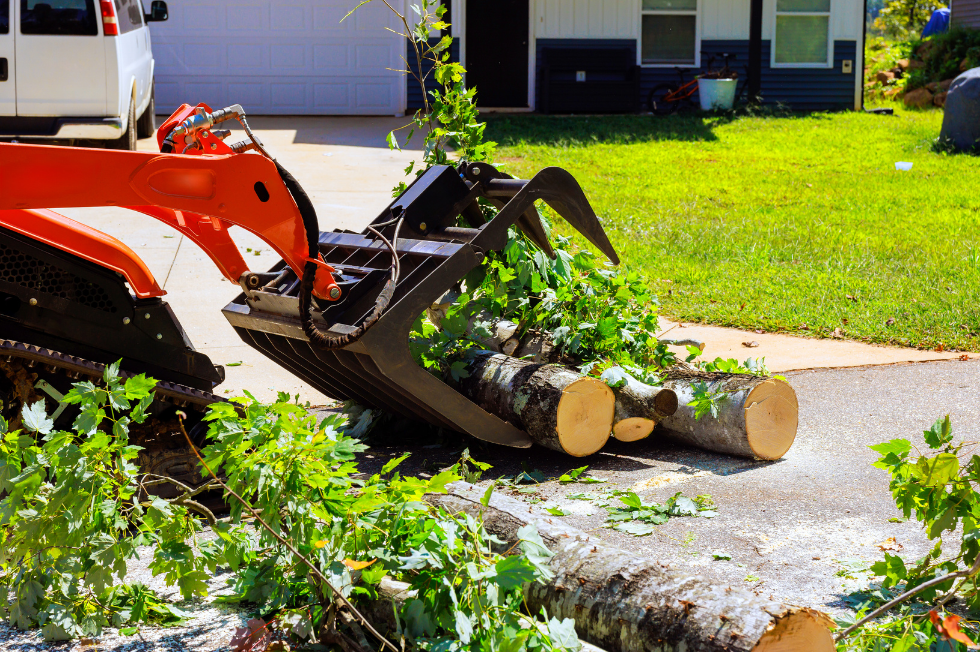
Tree removal in Birmingham, AL is best scheduled before fall, since Alabama sees a November spike in damaging winds and saturated red clay loosens root plates. How do you know a tree needs to come down? Watch for dead upper limbs, a sudden lean with cracked soil, conks or honey colored Armillaria mushrooms at the base, and trunk cavities.
Fall in Birmingham brings cooler mornings and a second severe weather season. Alabama sees a November spike in damaging winds and tornado activity, and the metro area collects more than 50 inches of rain each year. Saturated clay soil loosens root plates. Wind loads climb. A tree with hidden decay holds up fine in July and fails in a single October storm.
Most homeowners never inspect their trees until damage happens. The warning signs show up months earlier. Reading those signs now gives you time to act on your schedule instead of calling for emergency service at midnight with a limb across your roof.
Why Fall Weather Puts Birmingham Trees Under Stress
Jefferson County sits on dense red clay. Clay holds water, and waterlogged soil loses grip on root systems. Add the wind gusts common to fall frontal systems, and a leaning tree gains leverage against ground with little resistance left.
Species matters here. Water oaks and willow oaks fill older Birmingham neighborhoods like Crestwood, Forest Park, and Homewood. Both species rot from the inside while the outer canopy still looks healthy. A water oak reaching 60 years old often carries significant internal decay. Loblolly pines shed limbs under ice load and snap at weak unions. Sweetgums drop heavy branches with no warning at all.
Leaf drop also hides problems. Once the canopy thins in November, dead sections blend in with seasonal bare wood. Inspecting in late summer and early fall gives you a clearer read on which limbs died and which simply went dormant.
5 Signs You Need Tree Removal In Birmingham Before Fall Arrives
1. Dead Limbs And Hanging Branches In The Upper Canopy
Look up. Bare branches surrounded by full green growth signal dieback. A tree losing 25 percent or more of the canopy has a root or vascular problem feeding the decline, and the pattern spreads downward over the following seasons.
Hanging limbs deserve immediate attention. Arborists call these widowmakers because they detach with no wind at all. Snapped branches caught in the crotch of another limb sit under tension. A moderate gust releases them.
Walk your yard after any storm and scan the ground. Consistent twig and branch litter under one tree points to failing wood throughout the structure.
2. A Leaning Trunk With Soil Movement At The Base
Many trees lean from years of reaching toward sunlight. A gradual lean with straight upward growth at the top usually reflects normal adaptation. A sudden lean signals root failure.
Check the soil on the side opposite the lean. Cracked ground, a raised mound of dirt, or exposed roots lifting out of the earth means the root plate has started to pull free. That tree needs removal before the next heavy rain event.
Measure the change over time. Drive a stake at the base and note the distance to the trunk. Movement across a few weeks confirms active failure.
3. Mushrooms, Conks, And Soft Wood At The Root Flare
Fungal growth at the base ranks among the clearest signals of internal rot. Shelf fungus, also called conks, grows on wood already broken down by decay organisms. By the time mushrooms appear, the interior has lost structural strength.
Armillaria root rot spreads through Birmingham hardwoods and produces honey colored mushroom clusters near the trunk in fall. Hypoxylon canker affects stressed oaks across central Alabama and leaves a silver or gray crust after bark sloughs away.
Test the root flare with a screwdriver. Wood pushing in with light pressure has decayed. Healthy wood resists.
4. Trunk Cracks, Cavities, And Sections Of Missing Bark
Vertical splits running down the trunk indicate the tree has begun separating along the grain. Deep cracks reduce load bearing capacity across the entire stem.
Cavities and hollow sections weaken the trunk further. A tree retaining less than one third of the original wall thickness fails under wind load. Tap the trunk with a mallet and listen for hollow tones.
Bark loss exposes a dead cambium layer underneath. Dead cambium means no nutrient transport in that section. When missing bark wraps a significant portion of the circumference, the tree has begun girdling itself.
Codominant stems create another failure point. Two trunks growing from one union with bark pinched between them split under stress. Bradford pears show this defect constantly and rarely survive past 20 years in Alabama.
5. Roots Threatening Your Foundation, Driveway, Or Utility Lines
Structural risk extends below ground. Roots lifting driveway slabs, cracking sidewalks, or pushing against foundation footers create expensive repair bills. Birmingham clay expands and contracts with moisture, and aggressive root systems accelerate the movement.
Silver maples and willows send roots into sewer lines and septic fields. Repair costs for a collapsed lateral run into thousands of dollars.
Trees growing into overhead power lines present a different hazard. Alabama Power maintains clearance along primary lines, though the service drop running to your house remains your responsibility. A limb resting on that line during a storm pulls the mast off your wall.
When Does Trimming Work Instead Of Full Removal
Not every problem tree needs to come down. Selective pruning removes deadwood and reduces canopy weight on an otherwise sound structure. Crown thinning improves wind flow through the branches and lowers sail effect during storms. Cabling and bracing support weak unions on healthy specimens worth preserving.
Removal becomes the answer when decay reaches the main stem, when the root system has failed, or when more than half the canopy has died. A certified arborist evaluates the trunk, root collar, and branch architecture together before recommending either path.
What Waiting Until Winter Actually Costs You
Emergency removal after a failure runs two to three times standard pricing. Crews work under hazardous conditions, often at night, with limbs under tension across structures.
Insurance adds another layer. Most homeowner policies cover damage from a fallen tree, though carriers deny claims when documentation shows the owner knew about a hazardous condition and took no action. A neighbor filing against your negligence changes the financial picture entirely.
Scheduled removal in late summer or early fall also protects your landscape. Crews work on dry ground with room to drop sections cleanly. Winter mud forces heavier equipment across soft turf.
Schedule Your Tree Inspection Before The Next Storm Rolls Through
Every sign above gets worse with time, never better. A leaning water oak in September becomes a roof repair in November. Jon’s Tree Service has removed hazardous trees across Birmingham, Hoover, Vestavia Hills, and the surrounding metro for homeowners facing exactly these conditions. Our crews handle full removal, stump grinding, storm cleanup, and preventive pruning with full insurance coverage and clear upfront pricing. Call Jon’s Tree Service today or request your free estimate at birminghamtreeguy.com, and get your property ready before fall weather makes the decision for you.


